Running a month
A fund's month is a sequence, and the order matters. Each step reads what the previous one posted, so running them out of order does not fail loudly; it quietly produces a book that reconciles to the wrong thing. This chapter walks the sequence the way an administrator actually runs it.
1. Post the month's capital activity
Subscriptions and redemptions are entered on Subscriptions & Redemptions; transfers are entered on Investor Transfers. These transactions walk a three-step lifecycle: create, confirm, post. Posting journalizes the activity. A posted subscription books a receivable against contributed capital; it does not touch cash, because no money has arrived yet.
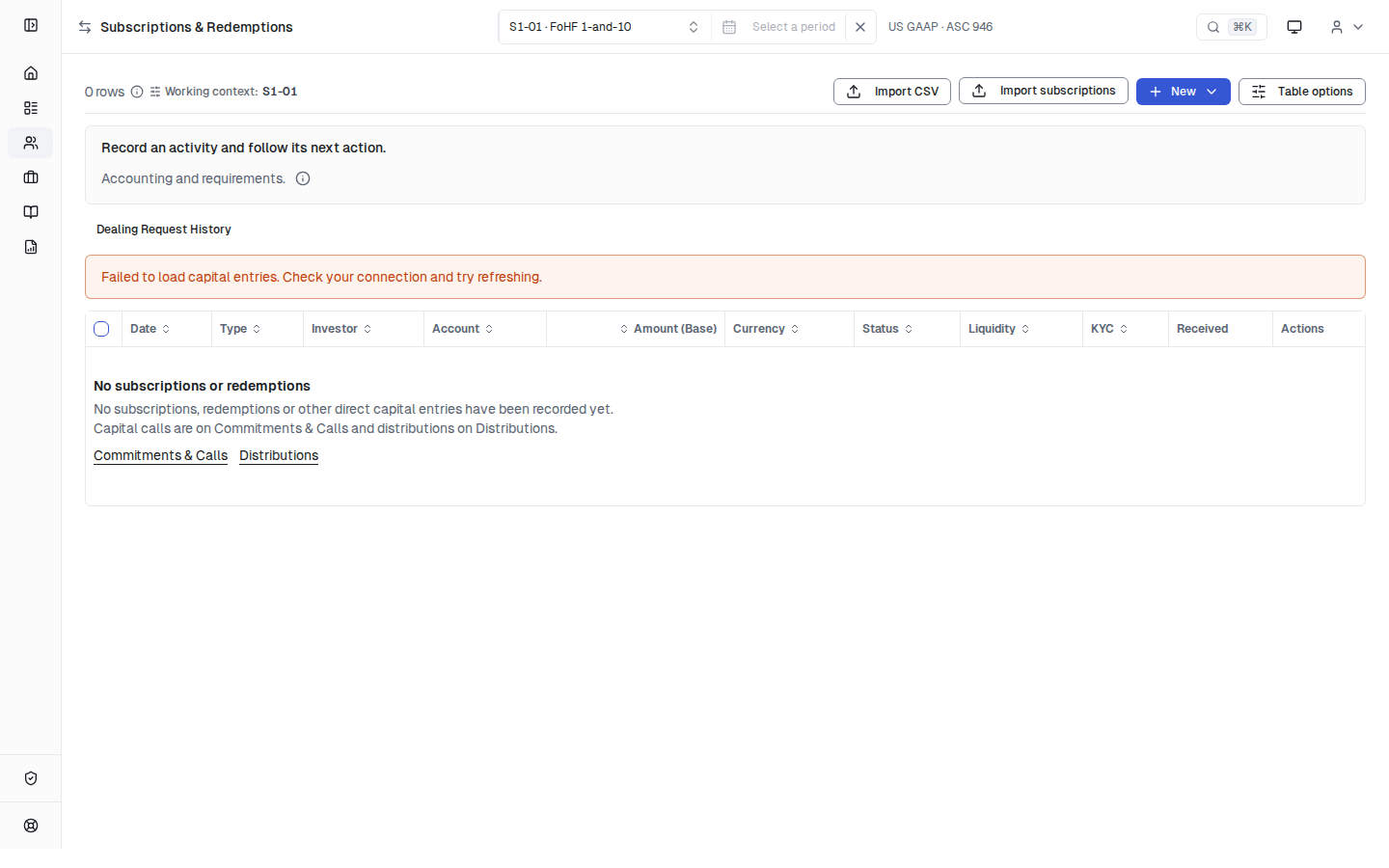
Two details that repay attention:
- Dates drive economics. An activity dated at the start of the period participates in the whole period's P&L under time-weighted allocation; one dated at the end participates in almost none of it. A full redemption is normally dated at the period start and priced at the prior month-end NAV, so the departing capital earns nothing in its final month and the account closes at exactly zero.
- Full redemptions end fee assignments. When an investor leaves, their fee assignments should expire in the following period. An account with no capital and a live incentive assignment is a misconfiguration.
2. Confirm the cash
Posting an activity creates a pending cash movement; Cash is where receipts and payouts are confirmed against the bank. This is the step that most often goes unrun, and the symptom is unmistakable: subscriptions pile up as receivables forever while outflows post real cash, and operating cash drifts deeply negative even though the fund is fine.
Receipts land in the subscriptions cash account. Sweep them to the operating account before deploying; the fund pays managers and expenses from operating, not from the subscription lockbox.
3. Mark the book
Positions are marked on Valuations. A fund of funds typically receives a manager statement as a monthly rate of return; ingesting the statement and revaluing the position books the mark and its journal entry. Marks received as estimates can be finalized later; if the period has closed by the time the audited figure arrives, the correction is recognized in the current open period rather than by reopening the sealed one.
4. Book the running costs
Administration, custody and similar operating costs are entered on the Entries tab of Expenses, not as raw journal entries. The allocation engine sources its expense pool from these entries. A raw journal entry to an expense account changes the fund's net income but reaches no investor's capital account, which is correct for reclasses and wrong for real costs.
5. Allocate
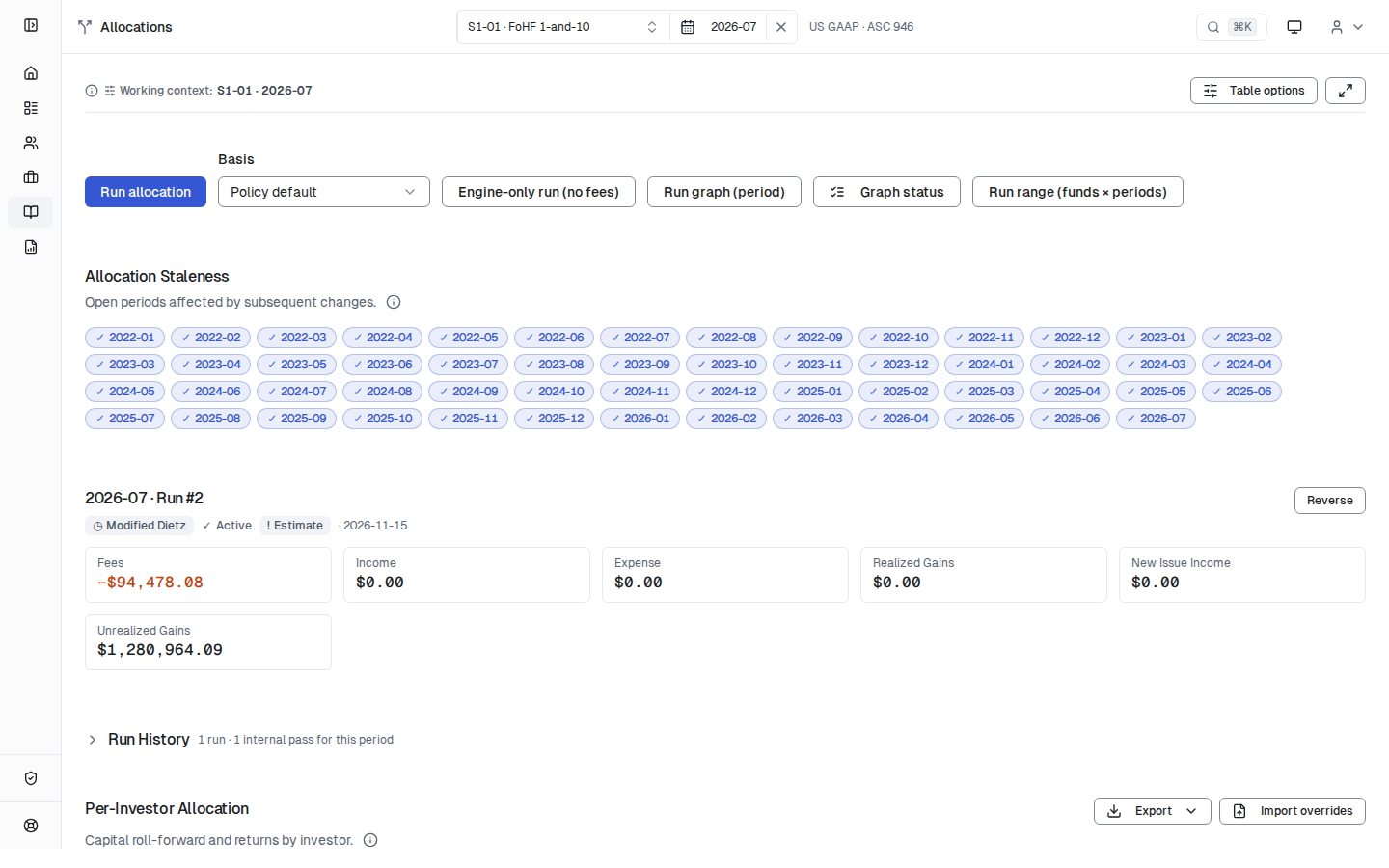
The period allocation run on Allocations is where everything above reaches the investors: the month's P&L, the expense pool, management fee accrual, and any incentive event the fund's fee terms schedule for that period (interim advances at quarter ends, crystallization or true-up at the reference boundary). Guards run before anything posts: an allocation that would leave any account negative is refused whole, with the account named.
6. Strike the NAV
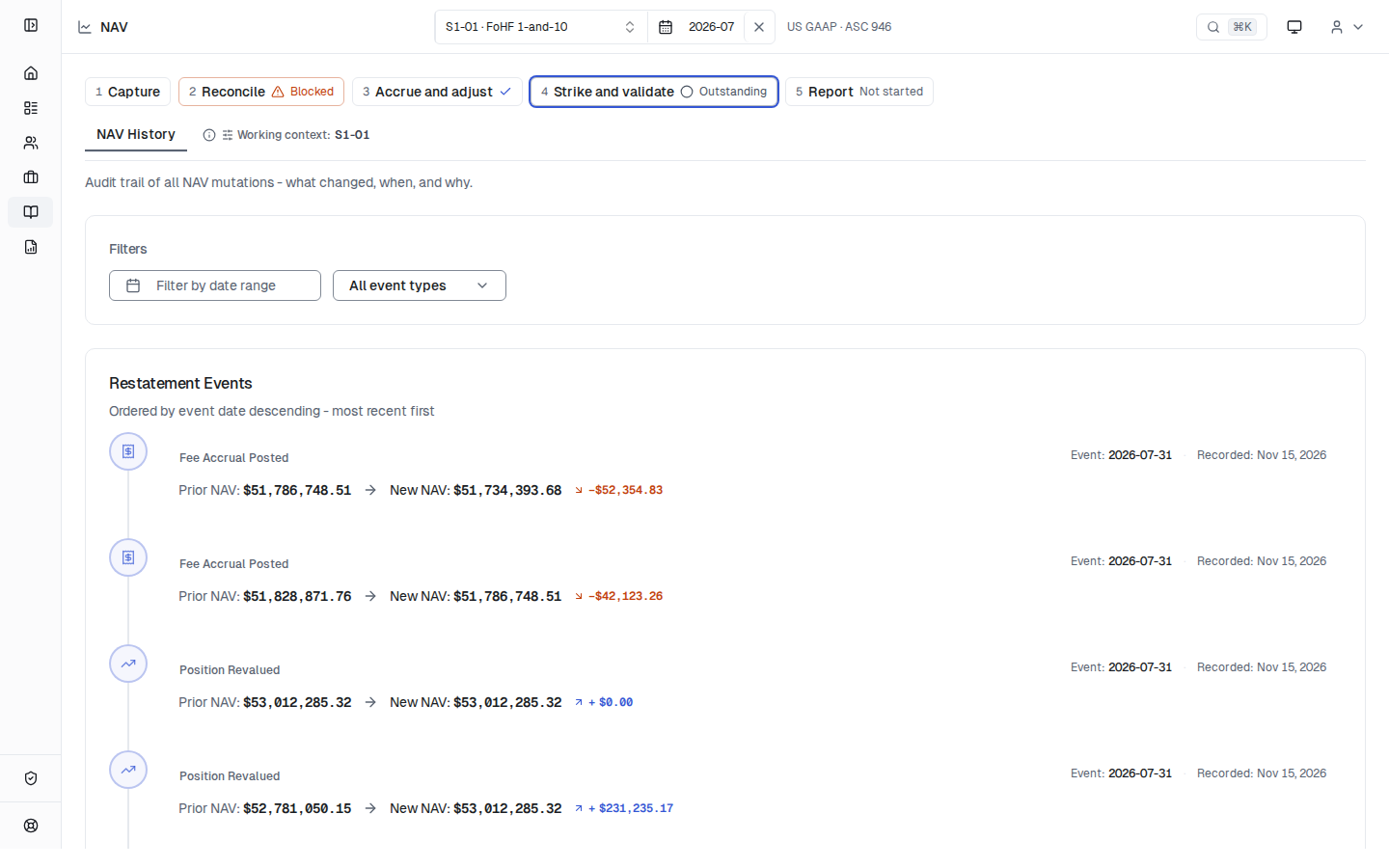
A final strike on NAV History freezes the period's NAV and each holder's units. Strikes are what repurchase offers price from and what the book-to-holder reconciliation certifies, so the strike belongs at the end of the sequence, after the allocation run has carried everything to capital.
The month is now consistent: ledger, capital accounts, and NAV all say the same thing, and the nightly accounting-check sweep will verify that they keep saying it.