The NAV lifecycle
A NAV is not a number that appears at month end; it is the end state of a sequence that started when the first trade file arrived. This chapter is about watching that sequence run - the surfaces a controller keeps open, and what each one actually knows.
Across many funds
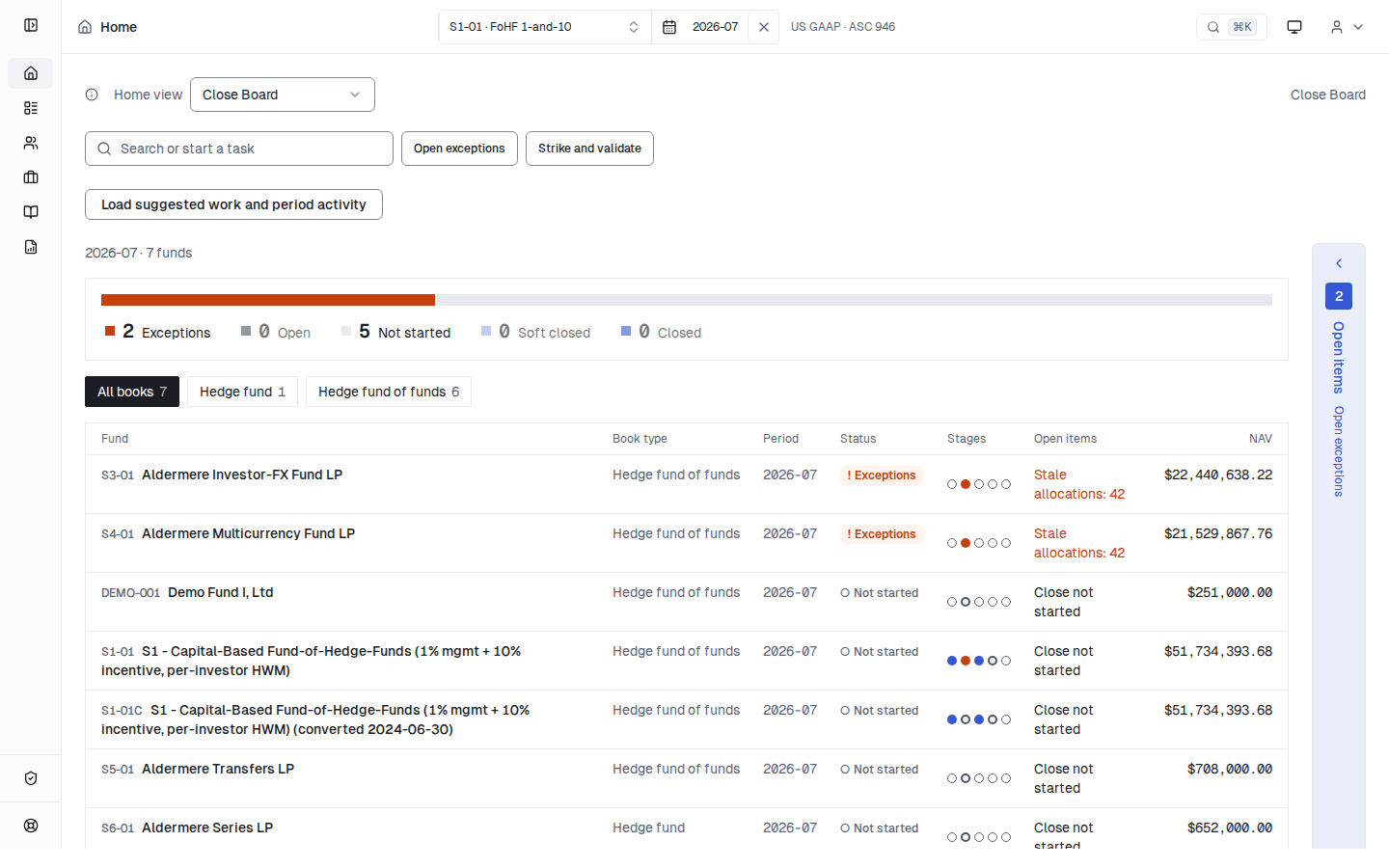
Home is the page you land on. Its Close Board answers one question for the selected period: where each fund's close stands. A bar across the top counts the funds by status (exceptions, open, not started, soft closed, closed), and clicking a status shows just those funds. Chips narrow the list to one book type: private equity, hedge fund, real estate, credit, fund of funds or family office.
Each fund gets one row: its book type, period, status, open items and NAV. An exception (unposted transactions, unmarked positions, a stale allocation, a pending NAV true-up) is shown as a labeled count and links to the page where it is fixed. With a period in the header, every fund reports the period of its own calendar that had begun by that period's end; with none, each fund reports its current period.
Where the period stands
The Period Progress tab of Home shows the month as five stages, from capture through report. The critical property: every state there is DERIVED from the books at read time, not ticked off by a person. The strike stage reads clear only when a final NAV version exists for the period; a current allocation run with no NAV struck is outstanding, not done. The period-close checklist is the opposite by design - a predetermined list a person marks off. One knows the steps; the other knows the state, and the difference is what makes the view trustworthy. Every stage links to the page that does its work, opened on the same fund and period.
Estimate and final
Some funds publish an estimated NAV early (underlying manager statements arrive late, but investors want a number) and finalize once actuals land. The platform carries the distinction on the data itself: allocation results are marked estimate or final, and a final run supersedes the estimate with the correction flowing through rather than overwriting history. NAV shows the strikes side by side, so an estimate that later moved is a visible fact, not a silent replacement.
The fund at a glance
The Fund Overview tab of Home is the per-fund view: NAV, capital flows, recent activity, the period state. It is the view to keep open when someone asks "how is the fund doing" and the honest answer should come from the books. Its figures are not one snapshot, and each card says which it is: NAV and fees follow the period, while the capital totals, position value and operating cash are marked Live because they are the books as they stand now.
Investment review
Investment Review answers the question an investment committee actually asks: how did this fund do this period, and why. It is laid out as panels in the order the question unfolds - what the return was, headline plus quarter and year to date; what it did across the year as the growth of a single unit; and the decomposition beneath that.
The growth curve is footed to the engine's own linked return rather than recomputed for display. A chart that quietly disagreed with the performance figure printed beside it would undermine both, so the picture and the number come from one source.